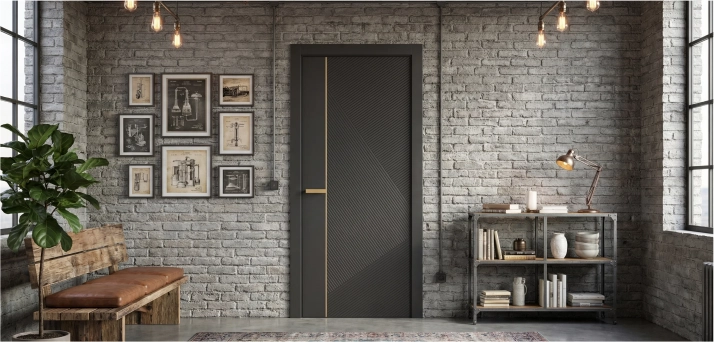
Natural textures
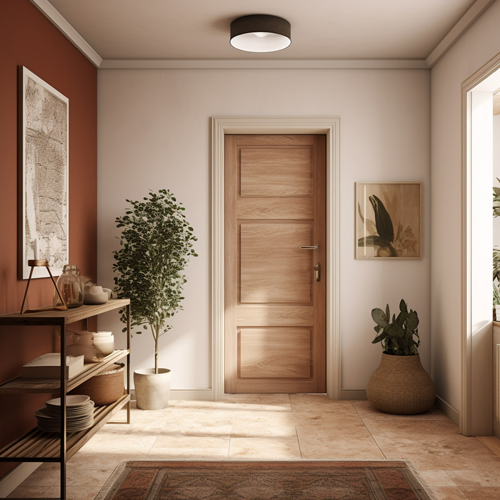
In 2026, doors that resemble natural materials are in demand: a calm wood grain, the texture of stone or concrete, a soft matte finish. Shiny "plastic" surfaces are giving way to natural ones.
When choosing a textured door, look at the floor and furniture. If there are too many wood shades in the room, they start to clash — it's better to pick one main shade and support it.
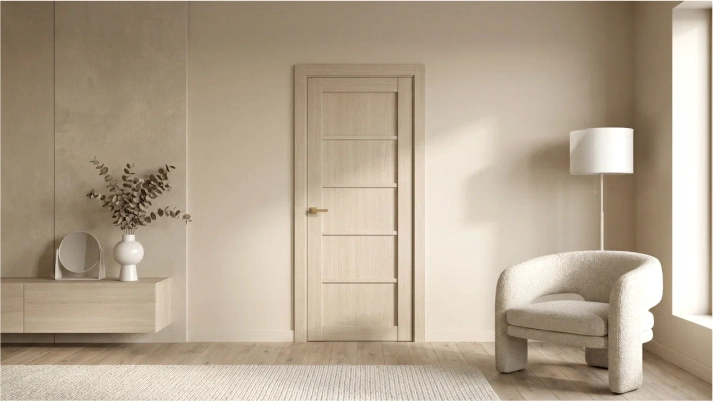
Tall openings
Doors from 2.3 m are considered tall. The higher the opening, the more spacious the room feels, so designers increasingly take doors all the way up to the ceiling.
If the ceilings are low and such a door won't fit, decor helps: a false transom above the door or a wide casing visually raises the opening. The key is for the construction to look cohesive and be made neatly.
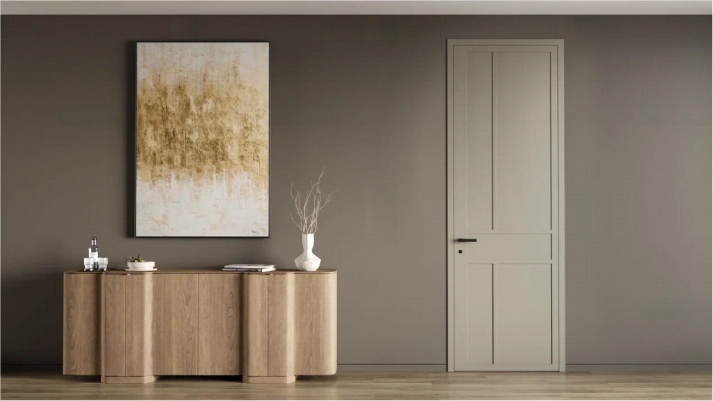
A door in the wall color
A leaf in the wall color doesn't break up the space and makes the interior calmer. This is especially noticeable in hallways with several doors in a row.
The color must match exactly: it's convenient to order an enamel door with the RAL or NCS code used for the walls.
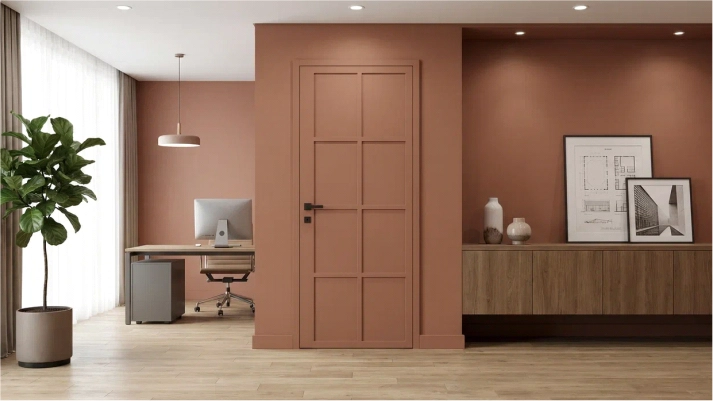
Discreet hardware
Concealed hinges, magnetic locks, slim handles or push-to-open — hardware steps into the background and doesn't distract from the door's form.
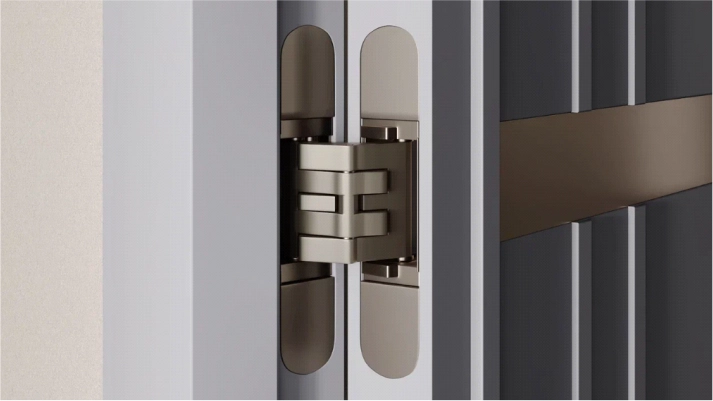
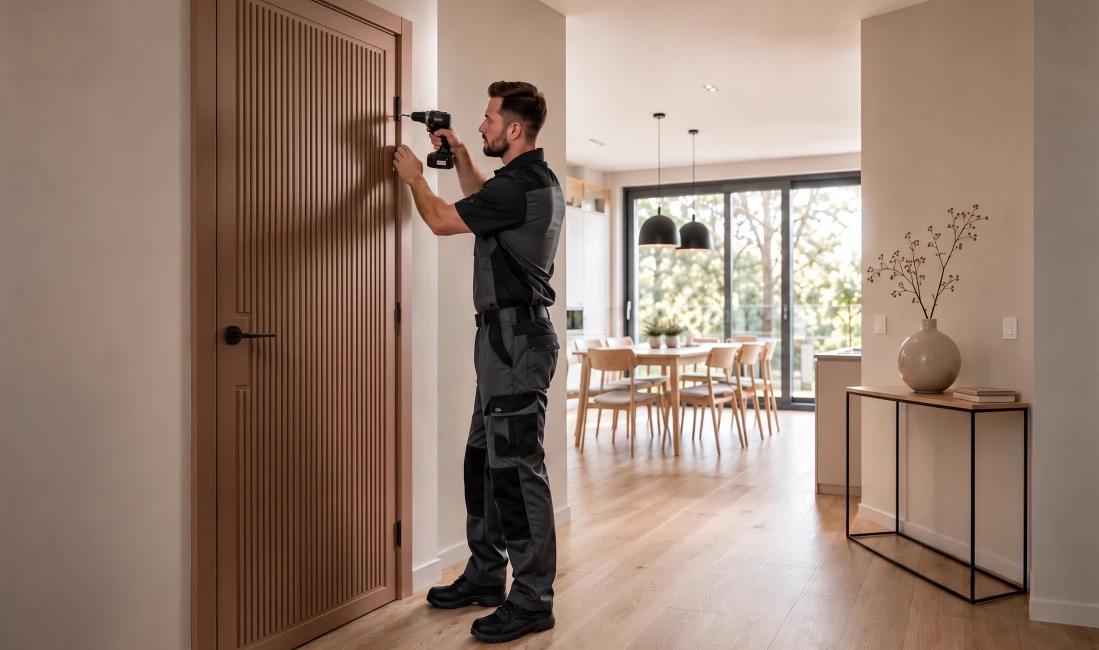
This kind of hardware requires precise installation. Good mechanisms work quietly and don't need constant adjustment.
Glass in the opening
Glass doors and partitions divide the space and let light through. Reeded, frosted or tinted glass preserves privacy without darkening the room.
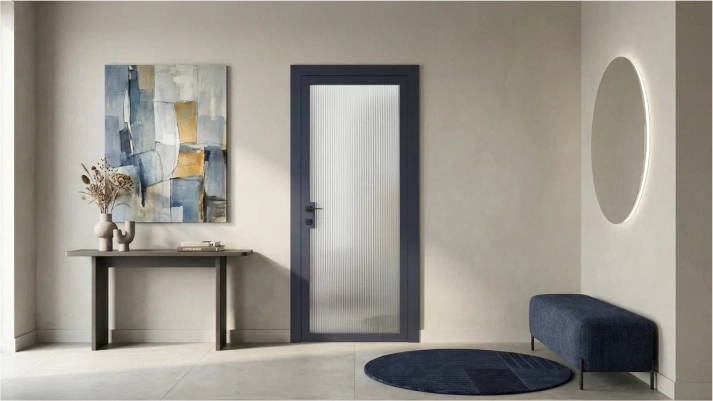
Glass is a good fit between the kitchen and living room, in a study or walk-in closet. A slim profile keeps the glass itself in focus.