Installing interior doors: where to start
Most door problems don't appear during installation — they come from not preparing for it.
A skewed frame, a gap under the leaf, a door that swings open by itself — usually these are the result of rushing. In fact, a lot is decided before the installer even gets the tools out.
Here are four steps worth taking in advance.
🔧 1. Finish the floor and walls
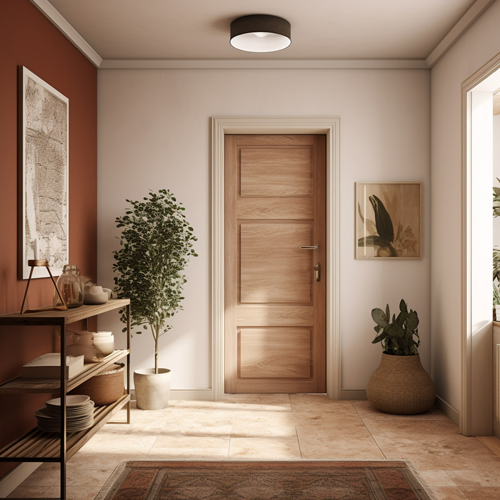
A door goes into a finished opening: after the walls are leveled and the flooring is laid.
Plaster and screed must dry completely — otherwise the moisture later seeps into the frame.
The floor level at the opening is checked in advance: the gap under the leaf depends on it.
A finished opening means a straight frame and a door that closes effortlessly.
⏳ 2. Don't squeeze the schedule
Work done in a hurry most often has to be redone.
Write down what gets done in the apartment and in what order.
Leave time for the details: checking dimensions and agreeing on finishes.
A day of preparation costs less than a new opening.
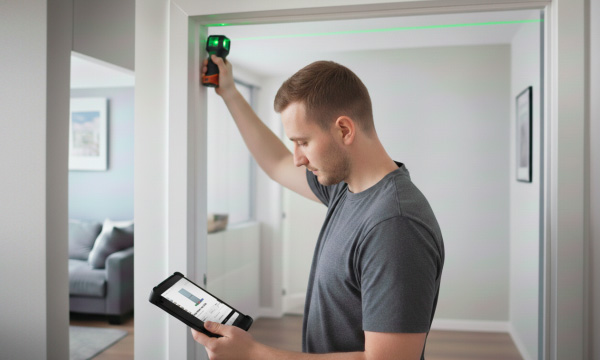
📏 3. Order a measurement before buying
The size of the opening, wall thickness and the height of the future floor determine which door to order.
The measurer will tell you the leaf size and extension jamb width you need.
They'll suggest the frame type — telescopic, coplanar or concealed.
They'll help you choose the opening side and avoid mistakes with hardware.
🤝 4. Bring the designer and installers together
When everyone involved in the renovation works from the same project, there are fewer surprises on site.
Discuss door height, finishes and hardware before ordering.
Give the installers the project and specification.
Agreements made before work starts save time later.
💡 The main thing
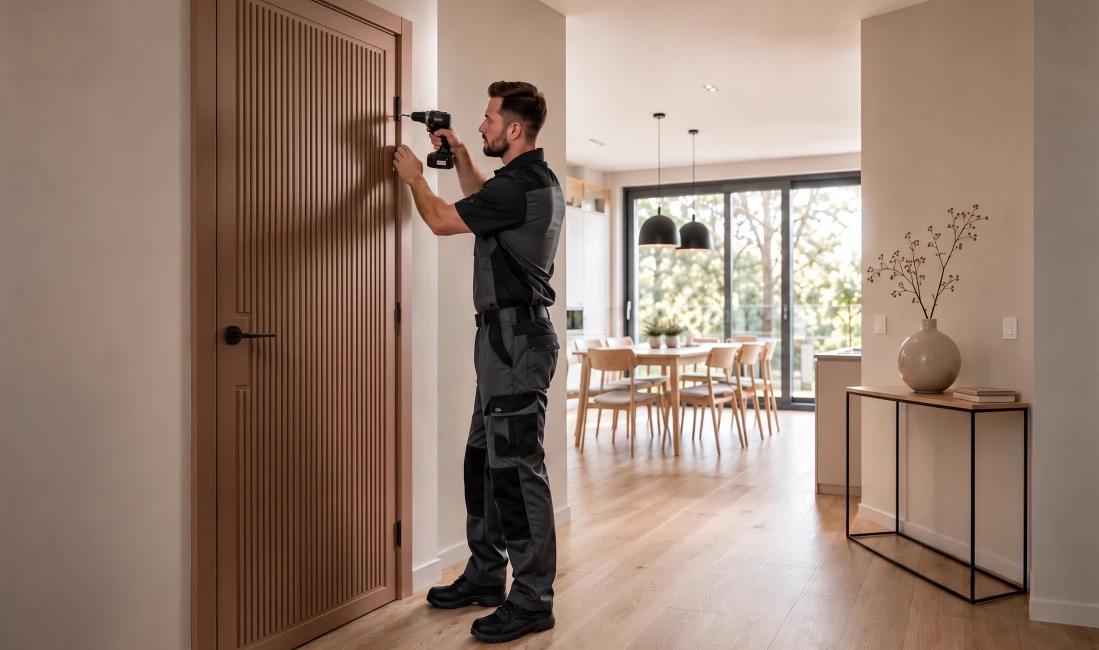
Installing a door is the last step, and its quality depends on a finished opening, accurate measurement and an agreed project.
If you go through these steps, the door will close softly and won't need adjustment.
Start by checking the opening — the rest will go more smoothly.
Tip: keep a photo of the opening with a tape measure — it will come in handy for both the measurer and the installers.